
AI is becoming the decision layer.
Across industries, buyers now ask AI systems to evaluate options, compare vendors, explain tradeoffs, summarize credibility, and recommend who to choose. In many cases, those recommendations shape shortlists, redirect spend, and determine which companies win revenue M D A.
This report maps the decision workflows where AI-influenced dollars are already material and accelerating. These are markets where three forces converge: massive transaction volume, rapid adoption of AI in buyer workflows, and evidence that AI meaningfully alters selection or spend. In these environments, even small shifts in AI recommendations can move hundreds of billions—or trillions—of dollars.
The implication is straightforward:
If AI can't confidently understand, verify, and recommend you, you don't compete.
The Highest-Impact AI Decision Workflows
B2B Procurement (SaaS, Vendors, Logistics, Services, etc.)
Where AI quietly redirects the largest pools of capital
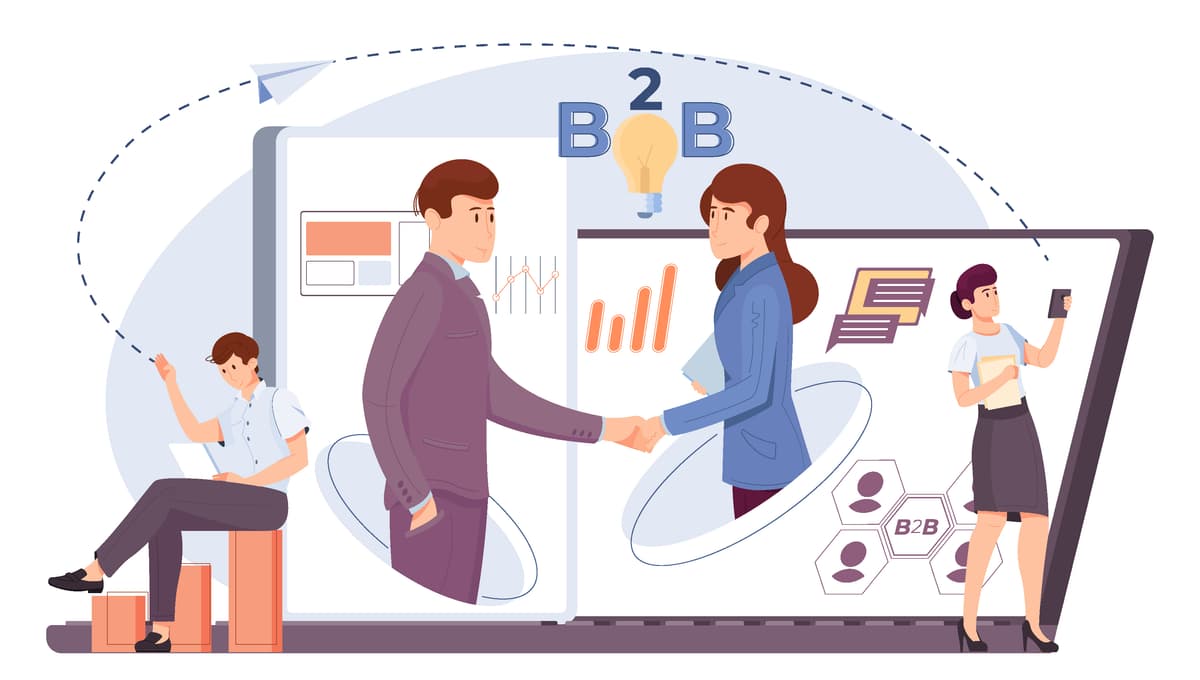
Global B2B procurement represents the largest decision surface in the economy, with over $30T in B2B e-commerce alone and more than $100T in total B2B spend worldwide E.
AI is already embedded in sourcing, supplier discovery, and RFP evaluation. In surveys, 92% of CPOs report exploring generative AI, and roughly 37% were piloting or deploying AI in procurement workflows by 2024 D. Early adopters report AI-driven sourcing identifying 2–3× more suppliers than traditional search M, 2×–5× ROI improvements in sourcing and procurement pilots D, and 83% of supply-chain executives reporting revenue or margin uplift tied to AI adoption M.
Even conservative assumptions imply AI is already influencing hundreds of billions of dollars annually, with credible paths toward trillion-dollar impact as adoption scales.
Why this matters
In procurement, visibility equals eligibility. If AI doesn't surface your company during sourcing, you are invisible—regardless of product quality.
Consumer E-Commerce
From search results to AI recommendations

Global online retail surpassed $7.4T in 2025 I. At the same time, AI is rapidly changing how consumers discover products. Between 38–59% of consumers report using generative AI during shopping F P, and 73% of AI shoppers say AI is now their primary product research tool A.
Behavioral data suggests this shift is already economically meaningful. AI-referred traffic spends 32% more time on site A. Revenue per visit from AI traffic increased 84% in months and has been rapidly approaching parity with traditional channels A. Through 2025, the conversion gap between AI-assisted and non-AI shoppers has narrowed dramatically A.
AI doesn't just assist. It frames the choice set—and increasingly determines which products get considered at all.
Why this matters
Retail winners won't just rank well. They'll be the products AI confidently recommends.
Travel Planning & Booking
AI as the itinerary architect

Global travel spending reached approximately $8.6T in 2024 M. Planning is shifting from search-driven workflows toward AI-generated itineraries. 58% of U.S. travelers now use AI to plan trips AF. Global AI usage in travel planning exceeded 40% in 2024 and is trending toward 60%+ T.
As trust improves, AI is increasingly influencing destination selection, hotel and airline choice, and itinerary structure. Early chatbots showed high error rates (around 90% in early 2024), but accuracy and trust have improved materially with newer models AF. AI-driven travel searches on retail platforms grew 4,700% YoY as planning and booking began to converge F.
Why this matters
If you are absent from AI-generated itineraries, you are absent from consideration.
Real Estate & Mortgages
High-stakes decisions, AI-guided discovery

Residential real estate represents multi-trillion-dollar annual transaction volume globally. AI has rapidly become a primary information source: 82% of Americans now use AI for housing market information R, and 67% report using ChatGPT specifically for real estate insights R.
These tools expand buyers' search radius, surface listings they would not otherwise see, and explain pricing, financing, and market dynamics. Consumers still trust agents slightly more overall, but AI now ranks nearly equal in perceived market knowledge—and ahead of friends or family as an information source R.
Why this matters
AI doesn't need to replace agents to change outcomes. It only needs to redirect attention.
Automotive
AI changes what buyers consider—and what they pay
Global new and used vehicle sales exceed $3–4T annually. AI adoption among car shoppers has accelerated sharply: 44% of car shoppers report using AI tools C, and 97% of AI users say AI influenced their purchase decision C.
Measured effects include AI users saving 3× more vehicles and generating 2× higher lead volume from AI-assisted searches C. The broader impact is substitution: when AI reframes a buyer's criteria or surfaces a different deal, flexibility on make/model increases and switching becomes more common.
Why this matters
If AI suggests a different model or dealer, the decision is already lost.
Beyond the Top Five
We also analyzed additional decision workflows, including financial products, professional services, healthcare, education, and B2B finance.
Many show high AI adoption AB and growing influence on discovery and shortlisting, but less mature evidence tying AI directly to executed transactions. The progression is consistent: discovery becomes shortlist, shortlist becomes selection, selection becomes transaction. Each step increases the economic stakes.
What This Means for Companies
Across every high-impact category, AI systems increasingly define your brand by what they can confidently verify, cite, and recommend.
AI-influenced purchasing is already shifting billions of dollars annually M D A. As AI becomes transaction-ready, those shifts will compound. That creates a new competitive axis. Do AI systems understand what you do? Can they verify your credibility? Do they include you when asked who's best?
Second Wind exists to keep the answer "yes"—continuously.
The Companies That Win
The winners won't be the loudest brands. They'll be the brands AI can parse clearly, trust confidently, cite repeatedly, and recommend decisively.
AI is already shaping the market's decisions. The only question is whether you show up when those decisions are made.